
We were camped at Parr Hill Lake the first time we visited the Little Swan River. I was curious about it as it was stocked regularly with brook trout and I had heard stories from my dad, particularly that he and his friends destroyed a canoe attempting to paddle it, but also that there was indeed fish there.
We first attempted fishing where it crossed near the turn-off to Parr Hill Lake, but no luck. Sensing it did not “feel” right, we decided to trust our instincts down some bush roads east of the hamlet. The road was rough, heavily rutted and connected to several off-shoots of trails, but the correct path to the river seemed obvious as if we had been there before.


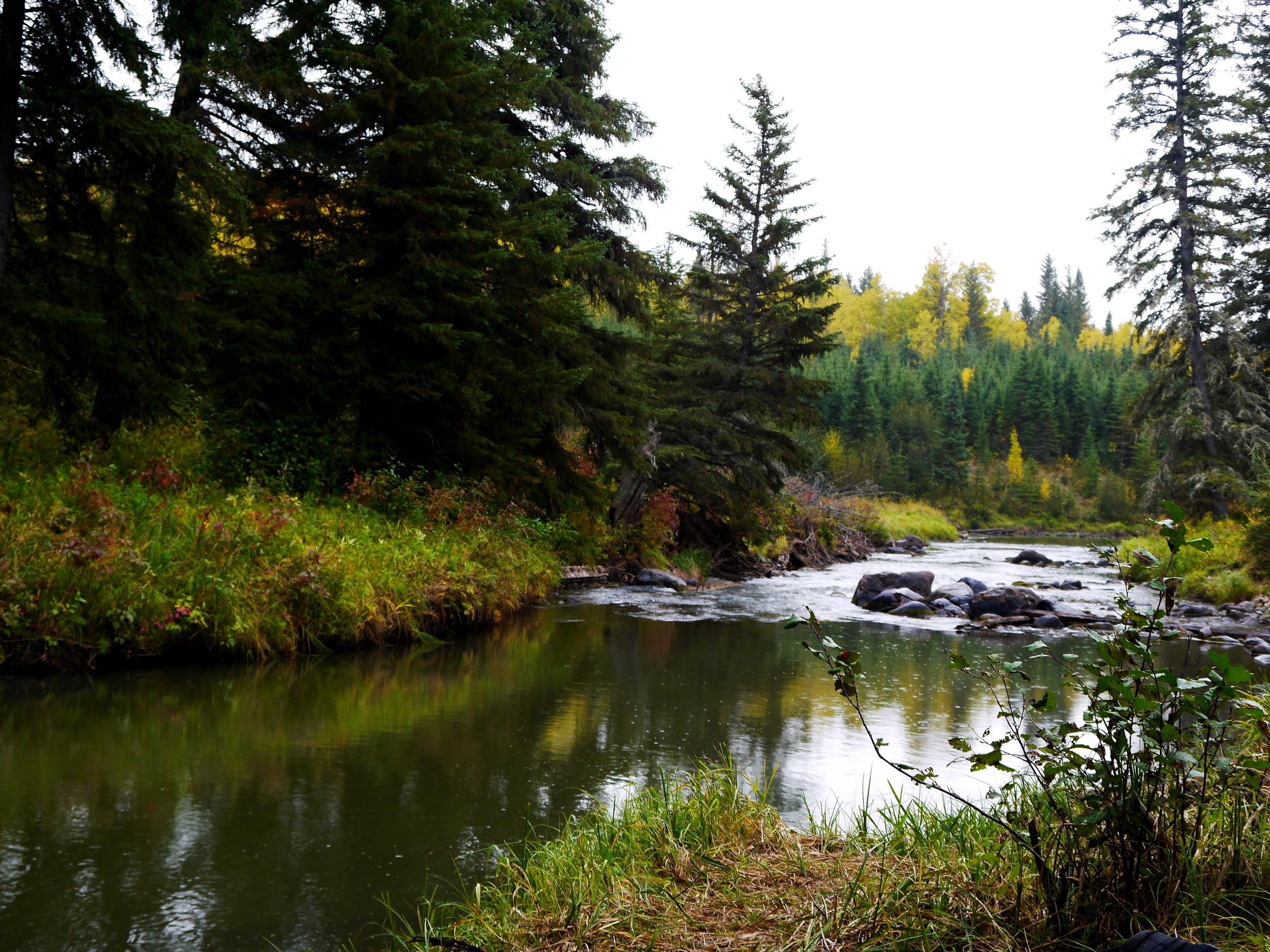
We approached the edge of a high plateau overlooking the river. It flowed from a dark hall of tall spruce and bent around a large meadow before disappearing back into the forest. There were ample pools to cast and rocks to stand on. There was even a sign declaring a “fish habitat management project.” It was the troutiest-looking trout stream we could ever trout.
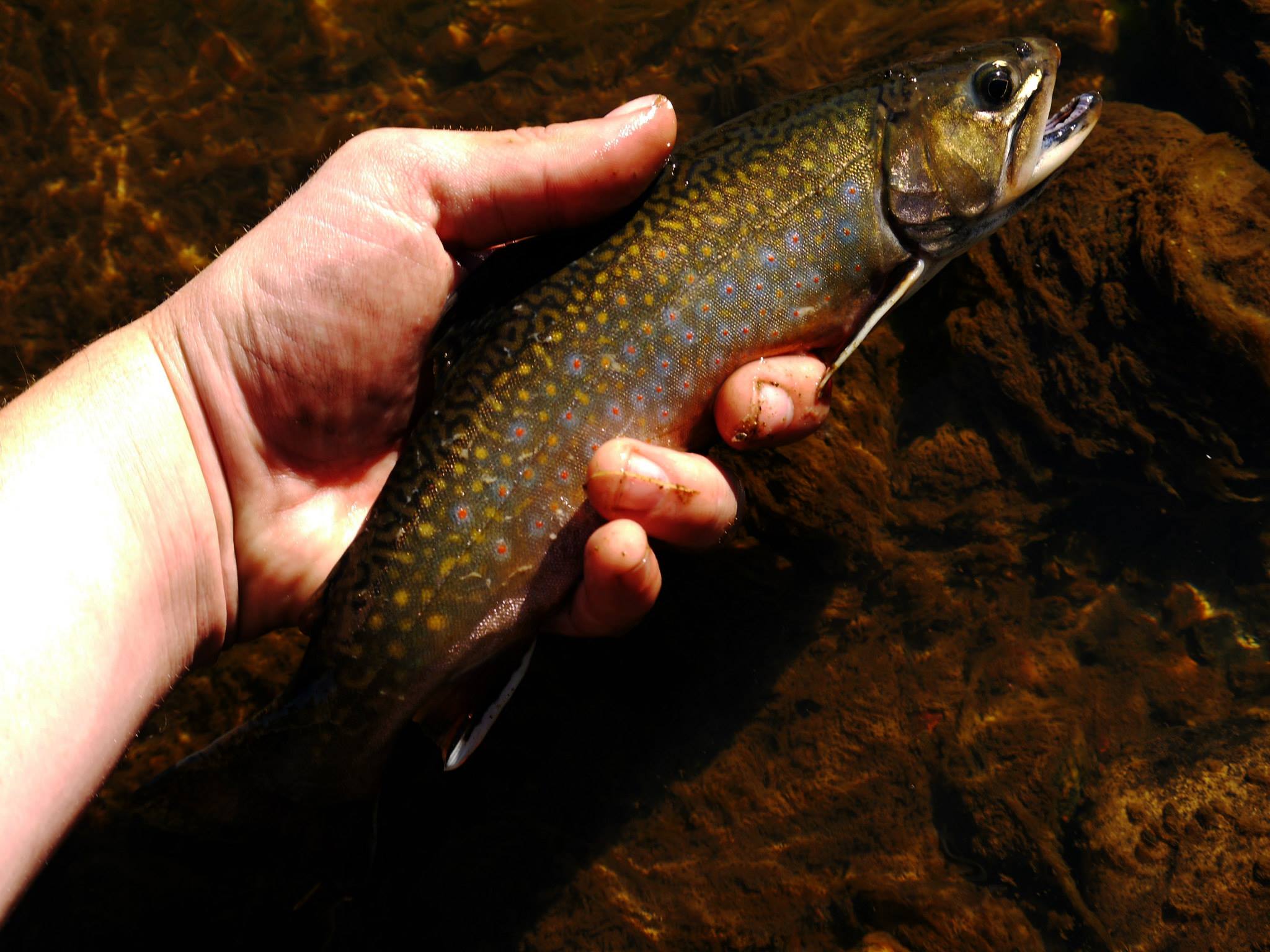
Little Swan River did not yield the results we expected, but we did manage to catch.


Its true allure was the atmosphere-shift from the open meadow to the steep spruce section upstream. There, we found an abundance of prime fishing spots and what appeared to be the “fish habitat management project” or possibly the derelict remains of one—I was not sure. But these did not produce and we fell back on the river’s deep blue-green reflections and shady pools to draw us further in until it was time to turn back.
The Little Swan River felt like finding pirate gold, but it was clearly a well-tread place. There was something about it that felt like hallowed ground. How many stories had their start from this same spot?
On the way home, I thought of my dad and his friends, how they got back to their car after trashing their canoe on the rocks, and whether that was something we might enjoy as well.